



Some visits help us understand the history of a region, and an abbey in Vendée is one of them. With so much religious heritage, architecture and so many places steeped in memory, it isn’t always easy to know which abbey in Vendée to visit, or how to plan your day out on holiday. Which abbeys are worth seeing near Saint-Hilaire-de-Riez? What can you actually discover there? Here is the essential information to help you plan your visits during your stay at Au Bois des Biches campsite.
At a glance
- Several abbeys in Vendée can be visited within an hour of Saint-Hilaire-de-Riez
- Each abbey offers a different experience: ruins, guided tours or cultural events
- The history of the abbeys is closely tied to the development of the Vendée region
- Some visits require you to check opening times in advance
- An abbey in Vendée is best discovered at a gentle pace, taking the time to look around
What makes the abbeys in Vendée special: history, architecture and influences
The abbeys in Vendée stand out for their close connection with the history of the region. From the Middle Ages onwards, they were not just religious places: they also played a part in the local economy and in shaping the landscape, particularly in the Marais Poitevin. The monks played a key role in draining the marshland and developing farming, changing the region for good.
In terms of architecture, an abbey in Vendée often blends several influences. You will find Romanesque elements, recognisable by their simple, solid forms, along with Gothic additions that appeared over the centuries, with higher vaults and a greater focus on light. Some abbeys still have their cloister, their monastic buildings or the remains of former abbey churches, a sign of the monastic life once lived there.
The history of Vendée’s abbeys has also been shaped by periods of conflict. The Wars of Religion, the French Revolution and gradual abandonment all led to destruction and successive rebuilding.
Today, these places have become cultural sites open to the public, where you can discover religious architecture, history and the story of the region through the centuries.
Must-see abbeys within an hour of Saint-Hilaire-de-Riez
Abbaye Saint-Jean d’Orbestier (Les Sables-d’Olonne)
Close to the ocean, Abbaye Saint-Jean d’Orbestier lets you discover a former Benedictine monastery founded in the 12th century. Part of the building still stands today, telling the story of the place and its former importance. This abbey in Vendée now hosts occasional cultural events, so you can visit the site in a different atmosphere, often linked to music or exhibitions. Distance from the campsite: approximately 45 minutes.

Our tip
Check the cultural programme before you visit: the abbey is only open on certain occasions, and events often give access to areas that are normally closed to the public.

Abbaye Notre-Dame des Fontenelles (La Roche-sur-Yon)
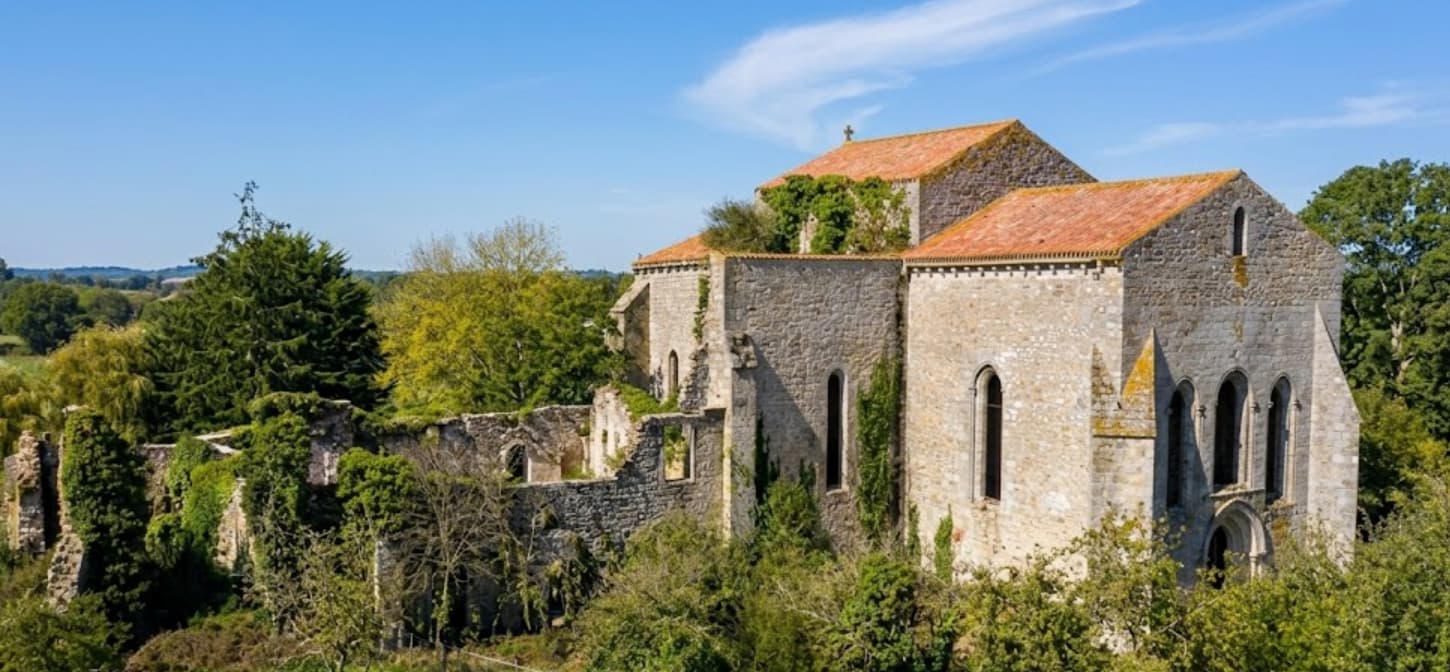
Notre-Dame des Fontenelles Abbey is an abbey in Vendée whose remains still reflect its importance in the Middle Ages. Founded in the early 13th century, it shows an architecture that marks the transition between Romanesque and Gothic. The site is not open for interior visits, but the ruins visible from the outside make it easy to picture the former abbey church and the monastic buildings. It is best enjoyed as a short heritage stop during a walk in the area. Distance from the campsite: about 43 minutes.
Our tip
As the interior is not accessible, take your time to look at it from different angles around the site: some parts of the chapter house are easier to understand if you step back slightly from the building.
Royal Abbey of Notre-Dame de Lieu-Dieu (Jard-sur-Mer)
Royal Abbey of Notre-Dame de Lieu-Dieu is an abbey in Vendée founded in 1197 by Richard the Lionheart. Even today, several parts of the site help you to understand how a former monastic complex was organised, such as the cloister, the chapter house and the surviving conventual buildings. The abbey is privately owned and is being restored gradually. Distance from the campsite: about 1 hour.
Our tip
Visits are only possible at certain times of year and are often guided: we recommend choosing a guided visit to understand how the spaces were used, as the remains are not always easy to interpret without an explanation.
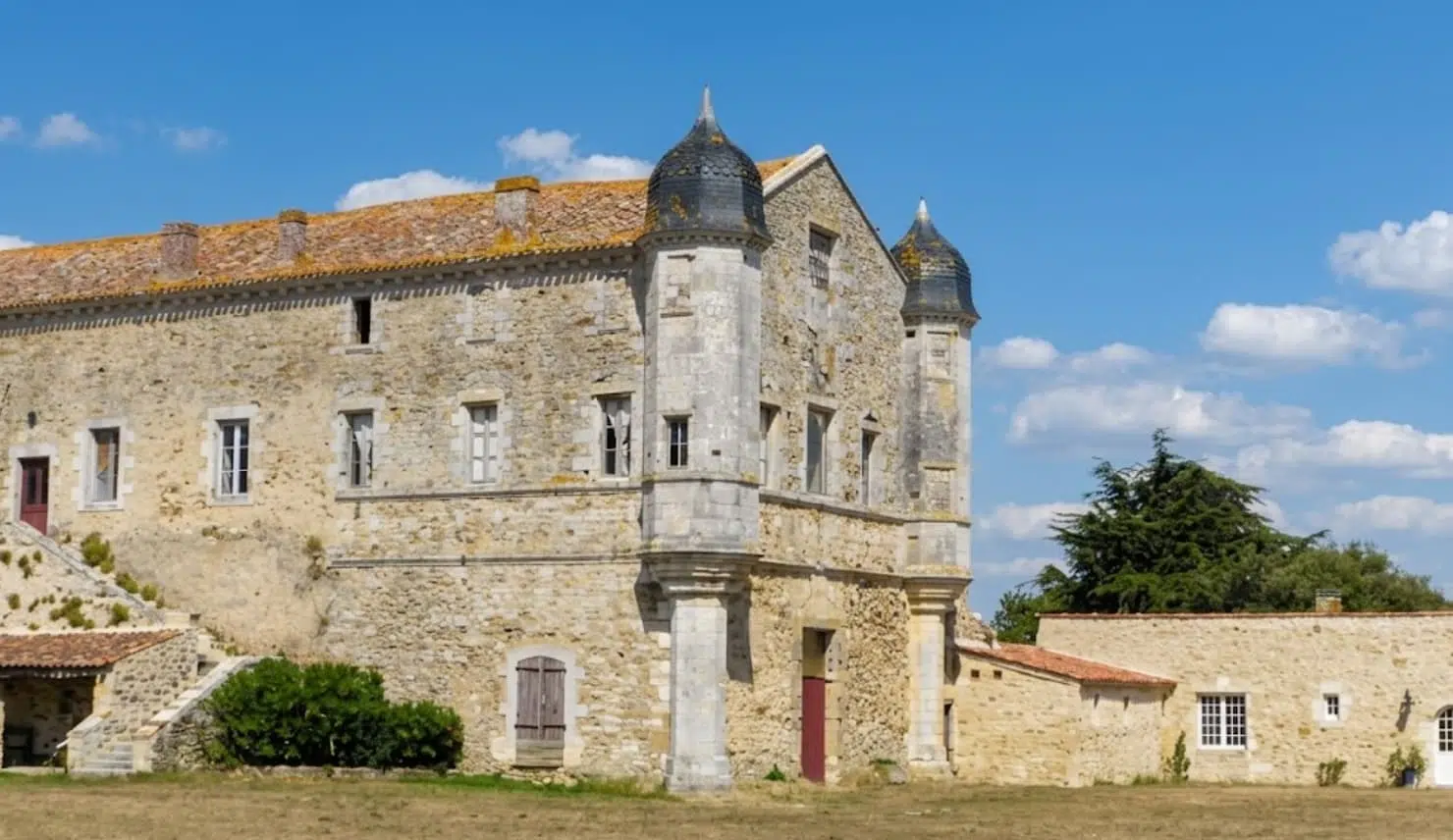
Abbey in Vendée: practical information to help you plan your visit
Visiting an abbey in Vendée sometimes calls for a little planning, as not every site works in the same way. Some abbeys can be explored freely, while others are open only on guided tours or at certain times of year. It’s a good idea to check the access conditions before you set off.
Depending on which abbey in Vendée you choose, you may be able to explore indoors, outdoors only, or at occasional cultural events.
Visit times vary too: allow between 15 minutes and 1h30 on average, depending on the site and how interested you are in history or architecture.
To make the most of your visit:
- check whether the abbey is open for self-guided or guided visits
- look at the official website for opening periods
- wear suitable shoes, as some floors are uneven
- combine your visit with a walk or another cultural stop nearby
An abbey in Vendée is usually best enjoyed at a relaxed pace, taking the time to look closely at the buildings and understand the part they played in local history.
How to behave in an abbey
Although an abbey in Vendée can be visited like any tourist attraction, it is above all a place steeped in history, and sometimes still used for cultural or spiritual activities. Being respectful helps to protect the site and keeps the visit enjoyable for everyone.
A few simple rules to keep in mind:
- keep quiet and avoid noisy conversations, especially in enclosed spaces
- do not touch the stonework, sculptures or other old features, which are often fragile
- respect areas that are closed to the public
- follow the signs along the route of the visit or the guide’s instructions
Some abbeys in Vendée are partly in ruins or being restored, so it’s important to follow the safety instructions displayed on site.
By staying at Au Bois des Biches campsite, you’ll have an ideal base for exploring the abbeys in Vendée with ease. Mix cultural visits with seaside walks and moments of relaxation for a holiday that is as enriching as it is restful.